PDA (Proactive driving assist)* *If equipped When a detectable object (System operating conditions and detectable objects) is detected, the proactive driving assist operates the brakes and steering wheel to help prevent the vehicle from approaching too close to the object. Warning: For safe use Driving safely is solely the responsibility of the driver. The proactive driving assist is designed to provide some assistance for regular braking and steering operations, as well as helping to prevent the vehicle from approaching too close to a detectable object. However, the scope of this assistance is limited. The driver should perform brake and steering operations as necessary. Read the following items carefully. Do not overly rely on the proactive driving assist and always drive carefully. (Situations in which the system may not operate properly) The proactive driving assist is not a system which reduces the amount of attention necessary for safe driving. Even if the system is operating correctly, the surrounding conditions as recognized by the driver and detected by the system may differ. It is necessary for the driver to pay attention, assess risks, and ensure safety. Over-reliance on this system to drive the vehicle safely may lead to an accident resulting in death or serious injury. Proactive driving assist is not a system which allows for inattentive driving and is not a system which assists in poor visibility conditions. The driver is solely responsible for paying attention to their surroundings and driving safely. When turning proactive driving assist off Situations in which the sensors may not operate properly: Situations in which the sensors and the systems may not operate properly When it is necessary to disable the system: When it is necessary to disable the system When towing another vehicle TDA (Trailer Driving Assist)* When lift up When lift up System operating conditions and detectable objects According to the driving conditions, the operation and detectable objects of the proactive driving assist will change as follows.
Function Conditions Operation Detectable objects
Obstacle Anticipation Assist (OAA) A detectable object is detected crossing the road Assistance with some brake operations is provided in order to reduce the possibility of a collision. Pedestrians Bicyclists
A detectable object is detected on the side of the road Assistance with some brake and steering wheel operations are provided according to the surrounding conditions to help prevent the vehicle from approaching too close to a detected object. Pedestrians Bicyclists Parked vehicles
Assistance with steering wheel operations is provided within a range that the vehicle will not deviate from its current lane.
Deceleration Assist (DA) A preceding vehicle or an adjacent vehicle cutting in front of the vehicle is detected The vehicle is gently decelerated so that the vehicle-to-vehicle distance will not be excessively short. Preceding vehicles Motorcycles
A curve is detected ahead of the vehicle The vehicle is gently decelerated if the vehicle speed is determined to be too high for the curve ahead. None
Steering Assist (SA) Lane is detected The system anticipates the driver’s operation and supports the operation of the steering wheel. None
Note: Vehicle speeds at which the system can operate Detectable object crossing the road assistance Approximately 20 to 35 mph (30 to 60 km/h) Detectable object on the side of the road assistance Approximately 20 to 35 mph (30 to 60 km/h) Preceding vehicle deceleration assistance Approximately 15 mph (20 km/h) or more Curve deceleration assistance Approximately 15 mph (20 km/h) or more Steering assist within a lane Approximately 5 to 80 mph (10 to 140 km/h) System operation will be canceled when In the following situations, system operation will be canceled: When the dynamic radar cruise control or cruise control is operating When the PCS is off Situations in which some or all of the functions of the system cannot operate: Situations in which some or all of the functions of the system cannot operate When the P, R or N shift position is selected The driver’s seat belt is unfastened In the following situations, the brake operation assist will be canceled: Approximately 9 mph (15 km/h) or less When a certain vehicle speed has been reached, as judged by the system, according to the surrounding conditions In the following situations, system operation may be canceled: When the brake control or output restriction control of a driving support system operates (For example: PCS, drive-start control) When the system determines that a detected object has moved away from the vehicle Vehicles with SDM (Stabilizer with Disconnection Mechanism): When SDM (Stabilizer with Disconnection Mechanism) is operating: PDA (Proactive driving assist) functions when SDM (Stabilizer with Disconnection Mechanism) is operating (if equipped) When lane lines can no longer be detected When the brake pedal has been depressed When the accelerator pedal has been depressed When the steering wheel has been operated with more than a certain amount of force When the turn signal lever is operated to the left/right turn position Warning: Situations in which the system may not operate properly Situations in which the lane may not be detected: Situations in which the lane may not be detected When a detectable object stops immediately before entering the path of the vehicle When passing extremely close to a detectable object behind a guardrail, fence, etc. When changing lanes while overtaking a detectable object When passing a detectable object that is changing lanes or turning left/right When there are objects (guardrails, power poles, trees, walls, fences, poles, traffic cones, mailboxes, etc.) in the surrounding area When there are patterns or a painting ahead of the vehicle that may be mistaken for a detectable object When passing through a place with a low structure above the road (tunnel with a low ceiling, traffic sign, signboard, etc.) When driving on snowy, icy, or rutted roads When a detectable object is approaching your vehicle When your vehicle or a detectable object is wandering When the movement of a detectable object changes (change in direction, sudden acceleration or deceleration, etc.) When suddenly approaching a detectable object When a preceding vehicle or motorcycle is not directly in front of your vehicle When there is a structure above a detectable object When part of a detectable object is hidden by another object (large luggage, umbrella, guardrail, etc.) When multiple detectable objects are overlapping When a bright light, such as the sun or headlights of another vehicle, is reflecting off of the detectable object When the detectable object is white and looks extremely bright When the color or brightness of the detectable object causes it to blend in with its surroundings When a detectable object cuts in front of or emerges from beside a vehicle When approaching a vehicle ahead which is perpendicular or at an angle to the vehicle, or is facing the vehicle If a parked vehicle is perpendicular or at an angle to the vehicle When a bicycle is a child sized bicycle, is carrying a large load, is carrying an extra passenger, or has an unusual shape (bicycles equipped with a child seat, tandem bicycles, etc.) When a pedestrian or bicyclist is shorter than approximately 3.2 ft. (1 m) or taller than approximately 6.5 ft. (2 m) When the silhouette of a pedestrian or bicyclist is unclear (such as when they are wearing a raincoat, long skirt, etc.) When a pedestrian or bicyclist is bending forward or squatting When a pedestrian or bicyclist is moving at high speed When a pedestrian is pushing a stroller, wheelchair, bicycle or other vehicle When a detectable object blends in with the surrounding area, such as when it is dim (at dawn or dusk) or dark (at night, in a tunnel, etc.) When the lane width is 13.1 ft. (4 m) or more When the lane width is 8.2 ft. (2.5 m) or less When the vehicle has not been driven for a certain amount of time after the engine was started While turning left or right or a few seconds after turning left or right While changing lanes or a few seconds after changing lanes When entering a curve, driving around a curve and a few seconds after driving around a curve
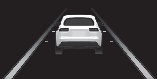
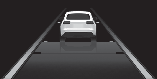
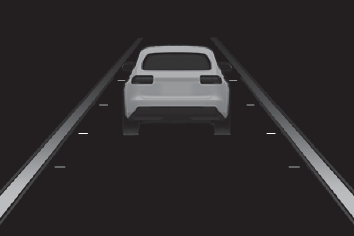
Changing proactive driving assist settings The proactive driving assist can be enabled/disabled through a customize setting. (Customizable features) The following settings of the proactive driving assist can be changed through customize settings. (Customizable features) System operation display Depending on the situation, the following indicators or icons will be displayed. Some icons cannot be displayed unless the display is changed to the driving safety support function information screen.
Icon Meaning
White: Monitoring for detectable objects Green: Detectable object crossing the road or detectable object on the side of the road assistance operating
A pedestrian has been detected as crossing the road or on the side of the road and brake or steering assistance is operating
A vehicle has been detected on the side of the road and brake or steering operation assistance is being performed
Steering operation assistance is being performed to prevent the vehicle from approaching too close to a detectable object on the side of the road When the steering assist is operating
Preceding vehicle deceleration assistance is being performed
Warning to maintain appropriate vehicle-to-vehicle distance
Curve deceleration assistance is being performed
Note: Hands off steering wheel warning operation In the following situations, a message urging the driver to grip the steering wheel and the icon shown in the illustration will be displayed on the display to warn the driver. If the system detects that the steering wheel is held, the warning will be canceled. When using the system, make sure to grip the steering wheel firmly, regardless of whether the warning is operating or not. When assistance to a detectable object crossing the road or assistance to a detectable object on the side of the road is performed and the system determines the driver is not holding the steering wheel If no operations are detected for a certain amount of time, a buzzer will sound, the warning will operate. This warning may also operate if the driver only operates steering wheel a small amount continuously. Warning operation after preceding vehicle deceleration assistance has ended After preceding vehicle deceleration assistance has ended, if the driver does not operate the brake pedal or accelerator pedal and the vehicle approaches the preceding vehicle, the display will flash and a buzzer will sound to urge the driver to decelerate. If the system determines that the driver is operating the brake pedal or accelerator pedal, the warning will be canceled.