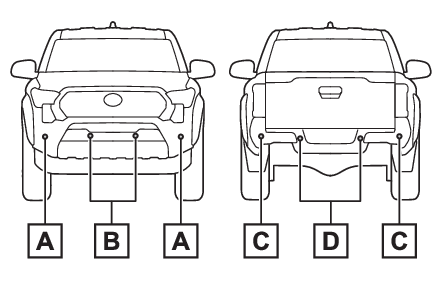
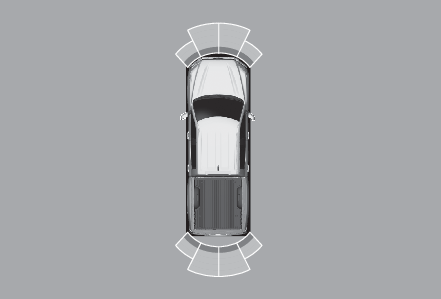
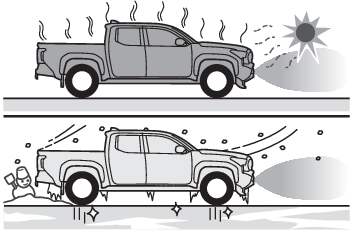
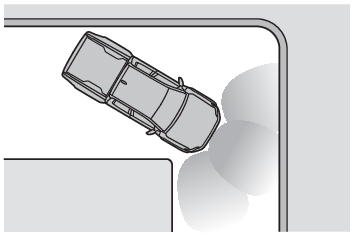
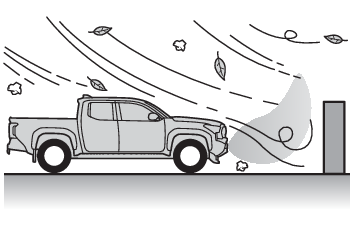
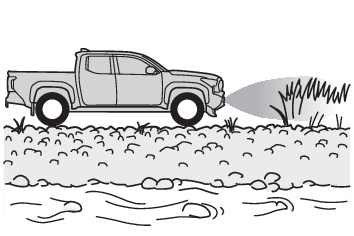
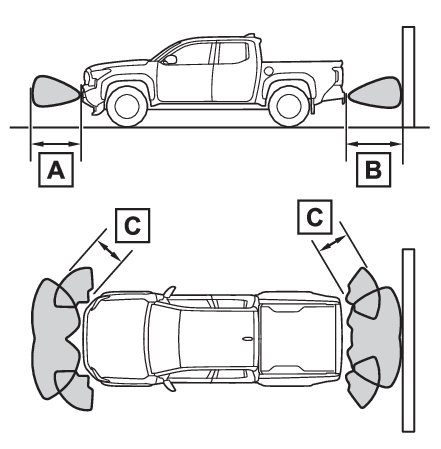
Intuitive parking assist* *If equipped The intuitive parking assist function detects the approximate distance from the vehicle and an object such as a wall using ultrasonic sensors and informs the driver with the multimedia display distance display and buzzer. System components Sensor Intuitive parking assist Sensor Parking Support Brake function (static objects) Type of sensors Front corner sensors Front center sensors Rear corner sensors Rear center sensors Display Intuitive parking assist Multi-information display Intuitive parking assist Display When the sensors detect an object, such as a wall, a graphic is shown on the multimedia display depending on the position and distance to the object. The illustration is an example for explanation and may differ depending on the specifications. Multimedia display Intuitive parking assist detection indicator* When the sensors detect an object, intuitive parking assist detection indicator illuminates. *If equipped Note: How to check the presence of intuitive parking assist detection indicator On vehicles with the intuitive parking assist detection indicator, the intuitive parking assist OFF indicator (Turning the intuitive parking assist function ON/OFF) will turn off when the shift position is changed to R while the intuitive parking assist is disabled. Intuitive parking assist Enabling/disabling the system Turning the intuitive parking assist function ON/OFF The intuitive parking assist function can be enabled/disabled through a customize setting. (Intuitive parking assist*1) When the intuitive parking assist function is disabled, the intuitive parking assist OFF indicator (Indicators) illuminates on the multi-information display. If the system switches to OFF (disabled) and the intuitive parking assist is stopped, the intuitive parking assist will not be re-enabled until ON (enabled) is selected again from the customize setting (Intuitive parking assist*1). (It remains off even if the engine switch is turned to ON again after the engine switch has been turned off.) Vehicles with intuitive parking assist detection indicator: The system will automatically turn on (enabled) and the intuitive parking assist OFF indicator will turn off if the shift position is changed to R. When the shift position is R, the intuitive parking assist cannot be turned on or off. The setting of intuitive parking assist itself will not change. Note: When towing a trailer When Auto Trailer Detection (ATD) (Auto Trailer Detection (ATD)) is activated, rear sensor turns off. When the shift position is in R, the intuitive parking assist OFF indicator (Indicators) turns on and a message is displayed in the multi-information display. If a camera malfunction occurs while the trailer is connected, there may be cases where the notification message that indicates intuitive parking assist, RCD (if equipped), or PKSB (if equipped) is OFF may not be displayed. Warning: Cautions regarding the use of the system There is a limit to the degree of recognition accuracy and control performance that this system can provide, do not overly rely on this system. The driver is always responsible for paying attention to the vehicle’s surroundings and driving safely. To ensure the system can operate properly Make sure to observe the following precautions. The system may not operate properly and may lead to an unexpected accident. When these precautions cannot be observed, turn the system off. Do not damage the sensors, and always keep them clean. Do not attach a sticker or install a component, such as a backlit license plate (especially fluorescent type), fog lights, fender pole or wireless antenna near a radar sensor. Do not subject the surrounding area of the sensor to a strong impact. If subjected to an impact, have the vehicle inspected by your Toyota dealer. If the front or rear bumper needs to be removed/installed or replaced, contact your Toyota dealer. Do not modify, disassemble or paint the sensors. Do not attach a license plate cover. Keep your tires properly inflated. Do not install a suspension other than a genuine suspension. Notes when washing the vehicle When using a high pressure washer to wash the vehicle, do not spray the sensors directly, as doing so may cause a sensor to malfunction. When using steam to clean the vehicle, do not direct steam too close to the sensors, as doing so may cause a sensor to malfunction. Note: The system can be operated when The engine switch is in ON. The intuitive parking assist is on. The vehicle speed is less than about 6 mph (10 km/h). Front corner sensors: The shift position is in a position other than P. (vehicles with automatic transmission) The parking brake is released. (vehicles with manual transmission) Front center sensors: The shift position is in a position other than P or R. (vehicles with automatic transmission) The parking brake is released, and the shift position is in a position other than R. (vehicles with manual transmission) Rear corner and rear center sensors:The shift position is in R. Vehicles with the intuitive parking assist detection indicator: Even when the intuitive parking assist is turned off (disabled), if the shift position is changed to R, the system will automatically turn on (enabled) and the intuitive parking assist OFF indicator will turn off. The setting of the intuitive parking assist itself will not change. Sensor detection information The sensor’s detection areas are limited to the areas around the vehicle’s front and rear bumpers. Certain vehicle conditions and the surrounding environment may affect the ability of a sensor to correctly detect an object. Objects may not be detected if they are too close to the sensor. There will be a short delay between object detection and display. Even at low speeds, there is a possibility that the object will come within the sensor’s detection areas before the display is shown and the warning beep sounds. It might be difficult to hear the buzzer due to the volume of the audio system or air flow noise of the air conditioning system. It may be difficult to hear the sound of this system due to the buzzers of other systems. If the meter malfunctions, the buzzer may not sound. Objects which the system may not be properly detected The shape of the object may prevent the sensor from detecting it. Pay particular attention to the following objects: Wires, fences, ropes, etc. Cotton, snow and other materials that absorb sound waves Sharply-angled objects Low objects Tall objects with upper sections projecting outwards in the direction of your vehicle People may not be detected if they are wearing certain types of clothing. Situations in which the system may not operate properly Certain vehicle conditions and the surrounding environment may affect the ability of a sensor to correctly detect objects. Particular instances where this may occur are listed below. There is dirt, snow, water drops or ice on a sensor. (Cleaning the sensors will resolve this problem.) A sensor is frozen. (Thawing the area will resolve this problem.) In especially cold weather, if a sensor is frozen the sensor display may be displayed abnormally, or objects, such as a wall, may not be detected. When a sensor or the area around a sensor is extremely hot or cold. On an extremely bumpy road, on an incline, on gravel, or on grass. When vehicle horns, vehicle detectors, motorcycle engines, air brakes of large vehicles, the clearance sonar of other vehicles or other devices which produce ultrasonic waves are near the vehicle A sensor is coated with a sheet of spray or heavy rain. If objects draw too close to the sensor. When a pedestrian is wearing clothing that does not reflect ultrasonic waves (ex. skirts with gathers or frills). When objects that are not perpendicular to the ground, not perpendicular to the vehicle traveling direction, uneven, or waving are in the detection range. When strong winds are blowing When driving in inclement weather such as fog, snow or a sandstorm When an object that cannot be detected is between the vehicle and a detected object If an object such as a vehicle, motorcycle, bicycle or pedestrian cuts in front of the vehicle or runs out from the side of the vehicle If the orientation of a sensor has been changed due to a collision or other impact When equipment such as a towing eyelet, transport hook, bumper protector, bumper trim, bicycle carrier or snow-removal device (snow plow) is installed near the sensor If the front of the vehicle is raised or lowered due to the carried load If the vehicle cannot be driven in a stable manner, such as when the vehicle has been in an accident or is malfunctioning When tire chains, compact spare tire or an emergency tire puncture repair kit are used When towing with the vehicle When the tailgate is opened Situations in which the system may operate even if there is no possibility of a collision In some situations, such as the following, the system may operate even though there is no possibility of a collision. When driving on a narrow road When driving toward a banner, flag, low-hanging branch or boom barrier (such as those used at railroad crossings, toll gates and parking lots) When there is a rut or hole in the surface of the road When driving on a metal cover (grating), such as those used for drainage ditches When driving up or down a steep slope If a sensor is hit by a large amount of water, such as when driving on a flooded road There is dirt, snow, water drops or ice on a sensor. (Cleaning the sensors will resolve this problem.) A sensor is coated with a sheet of spray or heavy rain When driving in inclement weather such as fog, snow or a sandstorm When strong winds are blowing When vehicle horns, vehicle detectors, motorcycle engines, air brakes of large vehicles, the clearance sonar of other vehicles or other devices which produce ultrasonic waves are near the vehicle If the front of the vehicle is raised or lowered due to the carried load If the orientation of a sensor has been changed due to a collision or other impact The vehicle is approaching a tall or curved curb Driving close to columns (H-shaped steel beams, etc.) in multi-story parking garages, construction sites, etc. If the vehicle cannot be driven in a stable manner, such as when the vehicle has been in an accident or is malfunctioning On an extremely bumpy road, on an incline, on gravel, or on grass When tire chains, compact spare tire or an emergency tire puncture repair kit are used When towing with the vehicle When the tailgate is opened. When towing a trailer Rear sensors turn off when the trailer connection is detected. When reversing, the rear sensors turn off, but the front corner sensors operate. Certification Intuitive parking assist Sensor detection display, object distance Detection range of the sensors Approximately 3.3 ft. (100 cm) Approximately 4.9 ft. (150 cm) Approximately 2.0 ft. (60 cm) The diagram shows the detection range of the sensors. Note that the sensors cannot detect objects that are extremely close to the vehicle. The range of the sensors may change depending on the shape of the object, etc. The distance and buzzer
Approximate distance to obstacle Buzzer
Front center sensor: Approximately 3.3 ft. (100 cm) to 2.0 ft. (60 cm)* Rear center sensor: Approximately 4.9 ft. (150 cm) to 2.0 ft. (60 cm)* Slow
Approximately 2.0 ft. (60 cm) to 1.5 ft. (45 cm)* Medium
Approximately 1.5 ft. (45 cm) to 1.0 ft. (30 cm)* Fast
Approximately less than 1.0 ft. (30 cm) Continuous
*Automatic buzzer mute function is enabled. (Muting a buzzer)
Intuitive parking assist buzzer A buzzer sounds when the sensors are operating. The buzzer beeps faster as the vehicle approaches a static object. When the vehicle comes within the approximately 1.0 ft. (30 cm) of the object, the buzzer will sound continuously. When 2 or more sensors simultaneously detect a static object, the buzzer sounds for the nearest object. After an intermittent buzzer begins sounding, if the distance between the vehicle and the detected static object does not become shorter, the buzzer will be muted automatically. (automatic buzzer mute function) Note: Adjusting the buzzer volume The buzzer volume of the intuitive parking assist, RCTA and RCD (if equipped) can all be changed at once from the customize settings. (Intuitive parking assist*1) Muting a buzzer When the temporary mute switch is displayed on the multimedia display, this switch can be pressed to temporarily mute the buzzer. Select the switch to mute a buzzer of the intuitive parking assist, RCTA and RCD (if equipped) all together. Mute will be automatically canceled in the following situations: When the shift position is changed. When the vehicle speed exceeds a certain speed. When there is a malfunction in a sensor or the system is temporarily unavailable. When the operating function is disabled manually. When the engine switch is turned off.