Rear Cross Traffic Alert (RCTA)RCTA (Rear Cross Traffic Alert)Side mirrors
RCTA (Rear Cross Traffic Alert)Outside rear view mirrors
RCTA (Rear Cross Traffic Alert)RCTA (Rear Cross Traffic Alert)**If equippedThe RCTA function uses the BSM rear side radar sensors installed behind the rear bumper.
This function is intended to assist the driver in checking areas that are not easily
visible when backing up.Warning:Cautions regarding the use of the systemThere is a limit to the degree of recognition accuracy and control performance that
this system can provide, do not overly rely on this system. The driver is always responsible
for paying attention to the vehicle’s surroundings and driving safely. (Cautions regarding the use of the system)To ensure the system can operate properlyTo ensure the system can operate properlyWarning buzzers
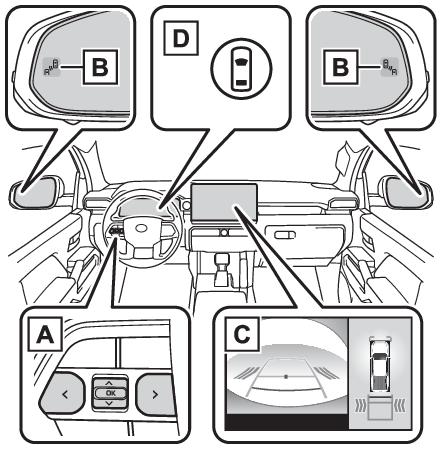
RCTA (Rear Cross Traffic Alert)System componentsMeter control switchesOperate the meter control switches to enable/disable the RCTA function on the multi-information
display.Outside rear view mirror indicatorsIf a vehicle is detected as approaching from the left or right behind the vehicle,
both outside rear view mirror indicators (Indicators) will blink and a buzzer will sound.Multimedia displayIf a vehicle approaching from the right or left at the rear of the vehicle is detected,
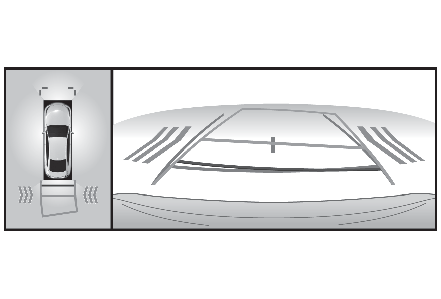
the RCTA icon (RCTA icon display) for the detected side will be displayed on the multimedia display. This illustration
shows an example of a vehicle approaching from both sides of the vehicle.Driving assist information indicatorIlluminates when the RCTA is turned off. At this time, a message will be displayed
on the multi-information display.RCTA (Rear Cross Traffic Alert)
Enabling/disabling the systemRear Cross Traffic Alert (RCTA)
Enabling/disabling the systemTurning the RCTA function on/offThe RCTA can be enabled/disabled through a customize setting. (RCTA (Rear Cross Traffic Alert)*1)When the RCTA function is off, the driving assist information indicator (Indicators) will illuminate and a message will be displayed on the multi-information display.
Each time the engine switch is turned to ON, the RCTA function is enabled.Note:When towing a trailerWhen Auto Trailer Detection (ATD) (Auto Trailer Detection (ATD)) is activated, the function automatically turns off.Outside rear view mirror indicator visibilityIn strong sunlight, the outside rear view mirror indicator may be difficult to see.Hearing the RCTA buzzerThe RCTA buzzer may be difficult to hear over loud noises, such as high audio volume.Radar sensorsTo ensure the system can operate properlyRCTA functionOperation of the RCTA functionThe RCTA function uses radar sensors to detect vehicles approaching from the right
or left at the rear of the vehicle and alerts the driver of the presence of such vehicles
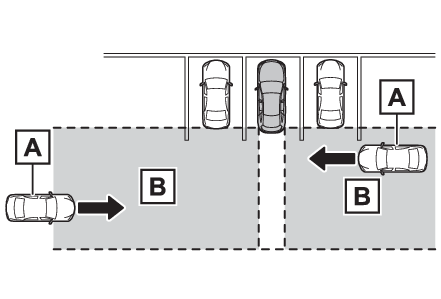
by flashing the outside rear view mirror indicators and sounding a buzzer.Approaching vehiclesDetection areas of approaching vehiclesRCTA icon displayWhen a vehicle approaching from the right or left at the rear of the vehicle is detected,
the following will be displayed on the multimedia display.This illustration shows an example of a vehicle approaching from both sides of the
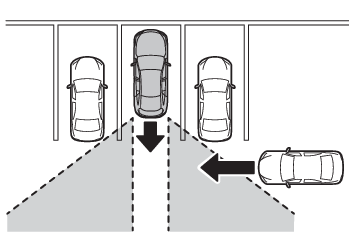
vehicle.RCTA function detection areasThe areas that vehicles can be detected in are outlined below.The buzzer can alert the driver of faster vehicles approaching from farther away.Example:
Approaching vehicle speed
Approximate alert distance
34 mph (56 km/h)(fast)
98 ft. (30 m)
5 mph (8 km/h)(slow)
13 ft. (4 m)
Note:The RCTA function is operational whenThe RCTA function operates when all of the following conditions are met:The engine switch is in ON.The RCTA function is on.The shift position is in R.The vehicle speed is less than approximately 9 mph (15 km/h).The approaching vehicle speed is between approximately 5 mph (8 km/h) and 34 mph (56
km/h).The 7-pin connector for Trailer Brake controller is not engaged (if equipped) or when
trailer is not detected using the Blind Spot Monitor (BSM) sensors.Adjusting the buzzer volumeThe buzzer volume of the RCTA, Intuitive parking assist (if equipped), and RCD (if
equipped) can be adjusted all together through a customize setting. (RCTA (Rear Cross Traffic Alert)*1)Muting a buzzer temporarilyWhen an object is detected, the temporary mute switch is displayed on the multimedia
display.Select the switch to mute the buzzer of the Intuitive parking assist (if equipped),
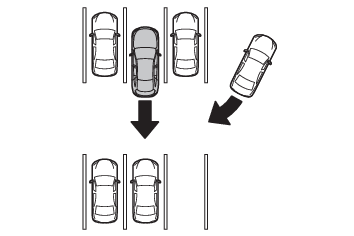
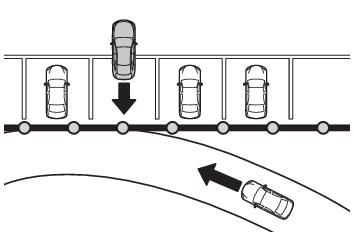
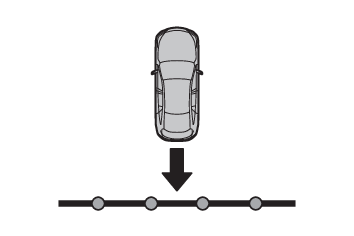
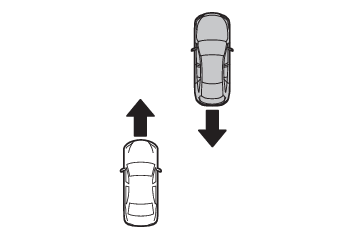
RCTA, and RCD (if equipped) all together.Mute will be canceled automatically in the following situations:When the shift lever is changed.When the vehicle speed exceeds a certain speed.When there is a malfunction in a sensor or the system is temporarily unavailable.When the operating function is disabled manually.When the engine switch is turned off.Conditions under which the system will not detect a vehicleThe RCTA function is not designed to detect the following types of vehicles and/or
objects:Vehicles approaching from directly behindVehicles backing up in a parking space next to your vehicleVehicles that the sensors cannot detect due to obstructionsGuardrails, walls, signs, parked vehicles and similar stationary objects*Small motorcycles, bicycles, pedestrians, etc.*Vehicles moving away from your vehicleVehicles approaching from the parking spaces next to your vehicle*The distance between the sensor and approaching vehicle gets too close*Depending on the conditions, detection of a vehicle and/or object may occur.Situations in which the system may not operate properlyThe RCTA function may not detect vehicles correctly in the following situations:When the sensor is misaligned due to a strong impact to the sensor or its surrounding
areaWhen mud, snow, ice, a sticker, etc.,is covering the sensor or surrounding area on
the position above the rear bumperWhen driving on a road surface that is wet with standing water during bad weather,
such as heavy rain, snow, or fogWhen multiple vehicles are approaching with only a small gap between each vehicleWhen a vehicle is approaching at high speedWhen equipment that may obstruct a sensor is installed, such as a towing eyelet, bumper
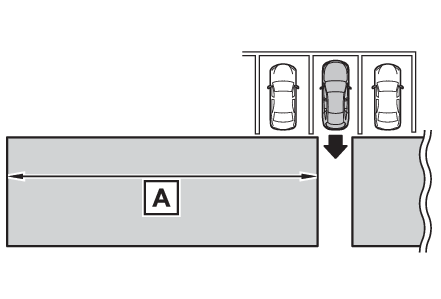
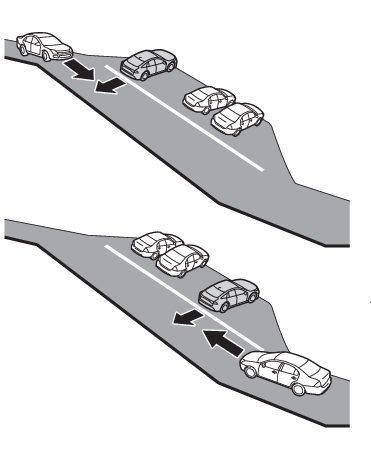
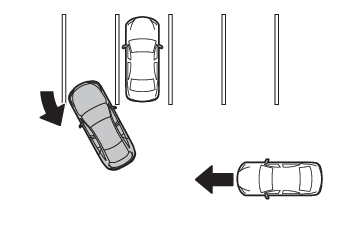
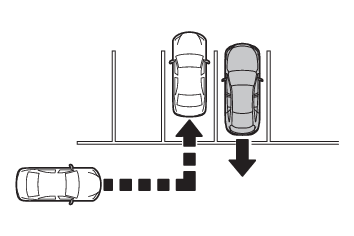
protector (an additional trim strip, etc.), bicycle carrier, or snow plowWhen backing up on a slope with a sharp change in gradeWhen backing out of a sharp angle parking spotImmediately after the RCTA function is turned onWhen the sensors cannot detect a vehicle due to obstructionsImmediately after the engine is started with the RCTA function onWhen there is a significant difference in height between your vehicle and the vehicle
that enters the detection areaWhen a sensor or the area around a sensor is extremely hot or coldIf the suspension has been modified or tires of a size other than specified are installedIf the front of the vehicle is raised or lowered due to the carried loadWhen turning while backing upWhen a vehicle turns into the detection areaSituations in which the system may operate even if there is no possibility of a collisionInstances of the RCTA function unnecessary detecting a vehicle and/or object may increase
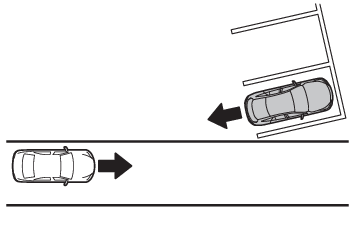
in the following situations:When the parking space faces a street and vehicles are being driven on the streetWhen the distance between your vehicle and metal objects, such as a guardrail, wall,
sigh, or parked vehicle, which may reflect electrical waves toward the rear of the
vehicle, is shortWhen equipment that may obstruct a sensor is installed, such as a towing eyelet, bumper
protector (an additional trim strip, etc.), bicycle carrier, or snow plowWhen a vehicle passes by the side of your vehicleWhen a detected vehicle turns while approaching the vehicleWhen there are spinning objects near your vehicle such as the fan of an air conditioning
unitWhen water is splashed or sprayed toward the rear bumper, such as from a sprinklerMoving objects (flags, exhaust fumes, large rain droplets or snowflakes, rain water
on the road surface, etc.)When the distance between your vehicle and a guardrail, wall, etc., that enters the
detection area is shortGratings and guttersWhen a sensor or the area around a sensor is extremely hot or coldIf the suspension has been modified or tires of a size other than specified are installedIf the front of the vehicle is raised or lowered due to the carried load