|
Cold tire inflation pressure
|
Tire pressure when the vehicle has been parked for three hours or more, or has not
been driven more than 1 mile or 1.5 km under that condition
|
|
Maximum inflation pressure
|
The maximum cold inflated pressure to which a tire may be inflated, shown on the sidewall
of the tire
|
|
Recommended inflation pressure
|
Cold tire inflation pressure recommended by a manufacturer
|
|
Accessory weight
|
The combined weight (in excess of those standard items which may be replaced) of automatic
transmission, power steering, power brakes, power windows, power seats, radio and
heater, to the extent that these items are available as factory-installed equipment
(whether installed or not)
|
|
Curb weight
|
The weight of a motor vehicle with standard equipment, including the maximum capacity
of fuel, oil and coolant, and if so equipped, air conditioning and additional weight
optional engine
|
|
Maximum loaded vehicle weight
|
The sum of:
(a) Curb weight
(b) Accessory weight
(c) Vehicle capacity weight
(d) Production options weight
|
|
Normal occupant weight
|
150 lb. (68 kg) times the number of occupants specified in the second column of Table
1* that follows
|
|
Occupant distribution
|
Distribution of occupants in a vehicle as specified in the third column of Table 1* below
|
|
Production options weight
|
The combined weight of installed regular production options weighing over 5 lb. (2.3
kg) in excess of the standard items which they replace, not previously considered
in curb weight or accessory weight, including heavy duty brakes, ride levelers, roof
rack, heavy duty battery, and special trim
|
|
Rim
|
A metal support for a tire or a tire and tube assembly upon which the tire beads are
seated
|
|
Rim diameter (Wheel diameter)
|
Nominal diameter of the bead seat
|
|
Rim size designation
|
Rim diameter and width
|
|
Rim type designation
|
The industry manufacturer’s designation for a rim by style or code
|
|
Rim width
|
Nominal distance between rim flanges
|
|
Vehicle capacity weight (Total load capacity)
|
The rated cargo and luggage load plus 150 lb. (68 kg) times the vehicle’s designated
seating capacity
|
|
Vehicle maximum load on the tire
|
The load on an individual tire that is determined by distributing to each axle its
share of the maximum loaded vehicle weight, and dividing by two
|
|
Vehicle normal load on the tire
|
The load on an individual tire that is determined by distributing to each axle its
share of curb weight, accessory weight, and normal occupant weight (distributed in
accordance with Table 1* below), and dividing by two
|
|
Weather side
|
The surface area of the rim not covered by the inflated tire
|
|
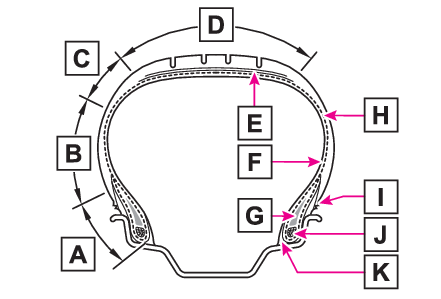
Bead
|
The part of the tire that is made of steel wires, wrapped or reinforced by ply cords
and that is shaped to fit the rim
|
|
Bead separation
|
A breakdown of the bond between components in the bead
|
|
Bias ply tire
|
A pneumatic tire in which the ply cords that extend to the beads are laid at alternate
angles substantially less than 90 degrees to the centerline of the tread
|
|
Carcass
|
The tire structure, except tread and sidewall rubber which, when inflated, bears the
load
|
|
Chunking
|
The breaking away of pieces of the tread or sidewall
|
|
Cord
|
The strands forming the plies in the tire
|
|
Cord separation
|
The parting of cords from adjacent rubber compounds
|
|
Cracking
|
Any parting within the tread, sidewall, or innerliner of the tire extending to cord
material
|
|
CT
|
A pneumatic tire with an inverted flange tire and rim system in which the rim is designed
with rim flanges pointed radially inward and the tire is designed to fit on the underside
of the rim in a manner that encloses the rim flanges inside the air cavity of the
tire
|
|
Extra load tire
|
A tire designed to operate at higher loads and at higher inflation pressures than
the corresponding standard tire
|
|
Groove
|
The space between two adjacent tread ribs
|
|
Innerliner
|
The layer(s) forming the inside surface of a tubeless tire that contains the inflating
medium within the tire
|
|
Innerliner separation
|
The parting of the innerliner from cord material in the carcass
|
|
Intended outboard sidewall
|
(a) The sidewall that contains a whitewall, bears white lettering, or bears manufacturer,
brand, and/or model name molding that is higher or deeper than the same molding on
the other sidewall of the tire, or
(b) The outward facing sidewall of an asymmetrical tire that has a particular side
that must always face outward when mounted on a vehicle
|
|
Light truck (LT) tire
|
A tire designated by its manufacturer as primarily intended for use on lightweight
trucks or multipurpose passenger vehicles
|
|
Load rating
|
The maximum load that a tire is rated to carry for a given inflation pressure
|
|
Maximum load rating
|
The load rating for a tire at the maximum permissible inflation pressure for that
tire
|
|
Maximum permissible inflation pressure
|
The maximum cold inflation pressure to which a tire may be inflated
|
|
Measuring rim
|
The rim on which a tire is fitted for physical dimension requirements
|
|
Open splice
|
Any parting at any junction of tread, sidewall, or innerliner that extends to cord
material
|
|
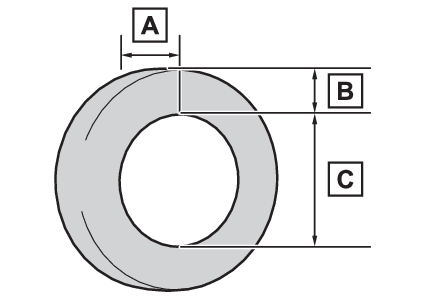
Outer diameter
|
The overall diameter of an inflated new tire
|
|
Overall width
|
The linear distance between the exteriors of the sidewalls of an inflated tire, including
elevations due to labeling, decorations, or protective bands or ribs
|
|
Passenger car tire
|
A tire intended for use on passenger cars, multipurpose passenger vehicles, and trucks,
that have a gross vehicle weight rating (GVWR) of 10,000 lb. or less.
|
|
Ply
|
A layer of rubber-coated parallel cords
|
|
Ply separation
|
A parting of rubber compound between adjacent plies
|
|
Pneumatic tire
|
A mechanical device made of rubber, chemicals, fabric and steel or other materials,
that, when mounted on an automotive wheel, provides the traction and contains the
gas or fluid that sustains the load
|
|
Radial ply tire
|
A pneumatic tire in which the ply cords that extend to the beads are laid at substantially
90 degrees to the centerline of the tread
|
|
Reinforced tire
|
A tire designed to operate at higher loads and at higher inflation pressures than
the corresponding standard tire
|
|
Section width
|
The linear distance between the exteriors of the sidewalls of an inflated tire, excluding
elevations due to labeling, decoration, or protective bands
|
|
Sidewall
|
That portion of a tire between the tread and bead
|
|
Sidewall separation
|
The parting of the rubber compound from the cord material in the sidewall
|
|
Snow tire
|
A tire that attains a traction index equal to or greater than 112, compared to the
ASTM F2493 standard reference test tire when using the snow traction test on the medium
pack snow surface as described in ASTM F1805-20, Standard Test Method for Single Wheel
Driving Traction in a Straight Line on Snow-and Ice-Covered Surfaces, and which is
marked with an Alpine Symbol (
) on at least one sidewall
|
|
Test rim
|
The rim on which a tire is fitted for testing, and may be any rim listed as appropriate
for use with that tire
|
|
Tread
|
That portion of a tire that comes into contact with the road
|
|
Tread rib
|
A tread section running circumferentially around a tire
|
|
Tread separation
|
Pulling away of the tread from the tire carcass
|
|
Treadwear indicators (TWI)
|
The projections within the principal grooves designed to give a visual indication
of the degrees of wear of the tread
|
|
Wheel-holding fixture
|
The fixture used to hold the wheel and tire assembly securely during testing
|